Teacher Spotlight: Scott Zacher
September 3, 2026
In this teacher spotlight, meet Scott Zacher and learn about how he went from Holston Academy’s part-time Social Studies teacher after several years as a classroom teacher and administrator, to full-time online teacher and Academic Coach.
Scott Zacher never planned to become a teacher.
In fact, when Scott looks back on his own school years, he jokes that he excelled at the more “labor-intensive” subjects such as gym, lunch, and homeroom and had little interest in spending his career inside a classroom.
Twenty-five years later, education has become a career he can’t imagine living without.
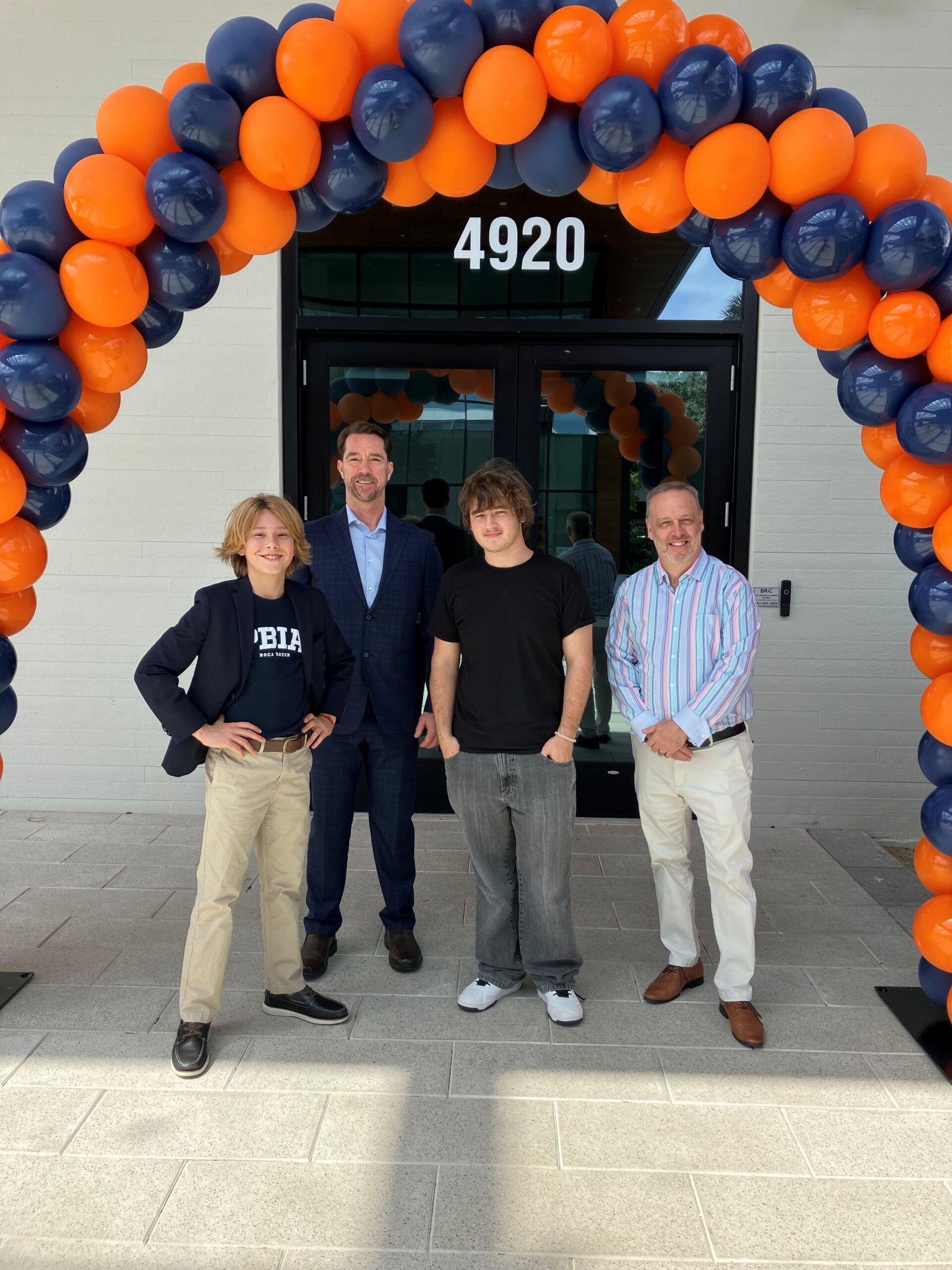
Scott joined Holston Academy as a part-time Social Studies teacher after several years as a classroom teacher and administrator. The part-time role gave him the flexibility to stay home with his daughter, but as Holston grew, so did Scott’s role within the school. Today, he serves as both a full-time teacher and Academic Coach, giving him the opportunity to support students both in and beyond the classroom.
For Scott, the path to education was less a calling than an unexpected discovery.
From Museum Curator to Teacher
Scott’s first job after college was at a museum. It was there that he began to notice something that would ultimately change the direction of his career: the sense of wonder on students’ faces as they walked through the doors.
“That had a profound effect on me,” Scott says. “I wanted to see more of that. More importantly, I wanted to be the one causing the wonder.”
That desire to spark curiosity has remained at the heart of Scott’s approach to teaching. What keeps him passionate after two decades in education is simple: the students.
“Every year is new, and every student is different,” he says. “You never know what the day will bring when dealing with teenagers!”
That unpredictability is part of what Scott loves about working with students. No two students learn in exactly the same way, and no two journeys through school look alike.
More Than a Teacher: An Advocate for Students
Scott’s experience in the classroom has also prepared him for his expanded role as an Academic Coach.
So, what exactly does an Academic Coach do?
Scott describes the role as being both a student ally and advocate: someone students can turn to for guidance, advice, encouragement, comfort, and understanding. But there’s another side to the job. Scott jokingly refers to Academic Coaches as the “CEO of the Office of Accountability.”
That combination of support and accountability is central to his approach. An Academic Coach helps students recognize their strengths, identify obstacles, and develop the habits they need to reach their potential. When a student isn’t performing at the level they’re capable of, Scott is there to help them figure out why, and what they can do differently.
His years as a classroom teacher have given him a valuable perspective.
“I know what students need,” he explains, “and I have seen what brings them success and causes failure.”
That experience allows Scott to look beyond a missed assignment or declining grade and consider the bigger picture.
Helping Students Become Independent Learners
For students transitioning to online school, one of the biggest adjustments isn’t the technology. It’s learning how to manage their own time and responsibilities.
In a traditional classroom, students have a teacher physically present, a bell schedule, and built-in reminders throughout the day. Online learning requires a greater degree of independence and self-discipline. Scott helps students build those skills gradually.
“Managing expectations has always been an effective way to prepare students for online learning,” he says. “Letting them know in advance what to expect, meeting with them often, and building their confidence as the year progresses.”
Regular one-on-one communication is an important part of that process. Scott works with students on organization, time management, and accountability, often helping them use tools they already understand such as digital calendars, notifications, and other technology to create systems that work for them.
And the goal isn’t simply to help students get through high school. It’s to help them become more capable and confident in managing their own lives.
Why Scott Believes Holston Is Different
Ask Scott what sets Holston Academy apart from other schools, and his answer comes quickly.
“The faculty and staff make Holston different from other schools.”
He points to the flexibility and dedication of Holston’s teachers, who regularly accommodate students’ unique schedules, including competitive sports commitments and international time zones.
But for Scott, the difference goes deeper than flexibility.
“They genuinely care about each student’s well-being and go to great lengths to help each student succeed,” he says. “Each student here is known and loved.”
That sense of connection is something Scott sees throughout the faculty.
He especially enjoys faculty meetings when teachers share stories about their students, whether it’s a new accomplishment, an interesting fact, or a personal breakthrough.
Those moments remind him that while Holston students may learn from different locations and have different schedules, they are still part of a community where people know them, care about them, and celebrate their successes.
What Does It Take to Thrive at Holston?
According to Scott, the students who thrive at Holston tend to share three qualities: they are self-driven, consistent, and willing to ask for help.
That last quality is especially important.
For students learning online, knowing when to ask for help can make all the difference. Independence doesn’t mean doing everything alone. It means taking ownership of your education, including knowing when you need support and being willing to seek it.
Ultimately, Scott hopes students leave Holston with much more than a diploma.
“I hope Holston turns out quality humans,” he says. “I want to see students enter society without fear of failure, with a sense of community, and a curiosity about the world.”
And Then There’s the Metallica…
Of course, no teacher spotlight on Scott would be complete without getting to know the person behind the Academic Coach.
If students think they know Scott, they might be surprised to learn that behind his professional exterior is a “raging metal head” who has traveled to Europe four times in the last three years to see Metallica.
When he’s not working with students, Scott can often be found watching his beloved New York Mets, or cheering on the Jacksonville Jaguars, for whom he has been a season ticket holder for 15 years.
He also coaches his daughter’s softball team and enjoys taking the family’s camper out on weekends when the weather cools down.
And if you ask Scott which historical figure he’d most like to have dinner with, his answer reveals another side of his personality: Lieutenant Colonel Joshua Chamberlain, the Civil War officer who led the 20th Maine at Little Round Top during the Battle of Gettysburg.
Scott is fascinated by Chamberlain’s leadership under seemingly impossible circumstances, and by the fact that he was an educator himself.
It’s a fitting choice for someone who has spent his career thinking about what makes people rise to a challenge.
“Don’t Be Me!”
When it comes to advice for students, Scott has a characteristically humorous answer: “Don’t be me!”
Scott readily admits that he wasn’t always the most serious student. Not because he lacked the ability, but because he chose not to apply himself. It took him 12 years to finish college, and he didn’t enter the teaching profession until he was 30. Today, he uses those experiences to encourage students to take advantage of the opportunities in front of them.
“I’d like students to avoid my mistakes so they can get a head start on life instead of bringing up the rear like I did.”
It’s advice that sums up much of Scott’s approach to education: be honest, work hard, ask for help, don’t be afraid to make mistakes and keep moving forward.
After all, Scott knows firsthand that there isn’t always one straight path to where you’re supposed to end up. Sometimes you stumble into it. And sometimes, if you’re lucky, you discover that the unexpected path is exactly where you were meant to be.
If you’re interested in getting to know our other faculty members, you can read Rebecca or Timothy’s spotlights next!